

Bright blue is a hard color to replace in a food formula. If your team is reviewing alternatives to FD&C certified dyes, you may have heard that the FDA now requires food factories to use “natural” colors. That is not the rule. The FDA approves each color additive for particular uses. A color’s plant or algae origin does not make every use lawful.
Spirulina extract is an existing US-listed blue color additive, but its current food-category list matters. The FDA’s broader 2026 order for use in human foods generally was delayed indefinitely while the agency reviews objections. For a US launch, start with the currently effective 21 CFR § 73.530, then confirm that the actual supplier material, formula, and finished food fit it.
Which factories have a realistic reason to test it?
These are potential buyers, inferred from the food categories expressly listed in § 73.530. A factory name alone is never an approval: the finished product and the exact color ingredient decide the regulatory fit.
- Beverage brands, bottlers, and drink-mix plants. Nonalcoholic beverages, beverage mixes and powders, and alcoholic beverages below 20% alcohol by volume are listed. A blue ready-to-drink beverage or powdered drink is an obvious R&D brief; a stronger spirit is not covered by that alcoholic-beverage entry.
- Yogurt, dairy-alternative, and frozen-dessert plants. Yogurt, nondairy yogurt alternatives, ice cream, nondairy frozen desserts, custards, puddings, nondairy puddings, and cottage cheese are listed. Start with the real processing and storage conditions of your formulation rather than assuming a bench-top color will survive the production line.
- Candy, frosting, and dessert-coating makers. Confections, including candy and chewing gum, plus frostings and dessert coatings and toppings are listed. This includes a clear testing path for confectionery teams working on blue decoration or filling concepts.
- Sauce, dressing, dip, and seasoning manufacturers. Salad dressings, condiments and sauces, dips, and unheated seasoning mixes are listed. “Unheated” is a meaningful limit for that seasoning category; the rest of the formula and process still need review.
- Ready-to-eat cereal and breadcrumb producers. The current list includes ready-to-eat cereals except extruded cereals, and breadcrumbs. A cereal plant should check the process and finished product before treating all cereal SKUs alike.
- Supplement tablet and capsule coaters. The rule lists coating formulations applied to dietary supplement tablets and capsules. That is a coating use, not a blanket authorization to color every supplement format or every part of a tablet.
The same section also names gelatin and a seasonal use for hard-boiled egg shells. Food teams should read the full regulation rather than relying on a shortened “approved for food” claim. If a food has a federal standard of identity, added color must also be allowed by that standard.

Did the US ban all synthetic colors in 2026?
No. The FDA revoked authorization for FD&C Red No. 3, with a food compliance deadline of January 15, 2027. The agency is also working with industry to remove six other certified colors frequently used in foods by the end of 2027, and it tracks company pledges. That industry effort is not a current rule that only spirulina extract, or only naturally derived colors, may be used.
The FDA also announced limited enforcement discretion for certain “no artificial colors” claims on foods without Part 74 certified colors. The letter explicitly says naturally derived colors still need FDA approval and manufacturers must meet other legal requirements. A marketing claim cannot substitute for checking the use authorization.
For the exact status of the delayed 2026 spirulina expansion, see our FDA spirulina extract rule explainer.
Five checks before a plant trial or purchase order
1. Name the finished food category. Give your regulatory team the exact SKU, process, and US market. Match that product to the currently effective § 73.530 list. Do not assume a general bakery item, extruded cereal, or high-ABV spirit is covered merely because the ingredient is blue spirulina.
2. Verify ingredient identity. The listed additive is a filtered aqueous extract of dried Arthrospira platensis with phycocyanins as principal coloring components. “Spirulina powder,” “blue spirulina,” and “phycocyanin” on a sales page do not by themselves establish that the offered ingredient matches this legal identity. Request the species, extraction process, full composition, and any carriers or diluents.
3. Get lot-specific quality documents. Ask for the current specification and certificate of analysis for the specific lot, including lead, arsenic, mercury, and a negative microcystin result. The current rule sets limits of 2 mg/kg lead, 2 mg/kg arsenic, and 1 mg/kg mercury. The additive is exempt from FDA batch certification, but that does not waive its identity, specifications, permitted uses, or labeling rules.
4. Test the actual production conditions. Run a pilot with your ingredient system, target shade, processing steps, packaging, and planned shelf life. Check color, appearance, flavor, and stability at each stage. Let your R&D and quality teams decide whether the material works in the finished product.
5. Review label and claims. Confirm the ingredient declaration and any color-related front-of-pack claim with your regulatory team before artwork approval. FDA’s 2026 labeling letter offers a narrow enforcement position; it does not create a general use authorization.
What to ask AimGrow
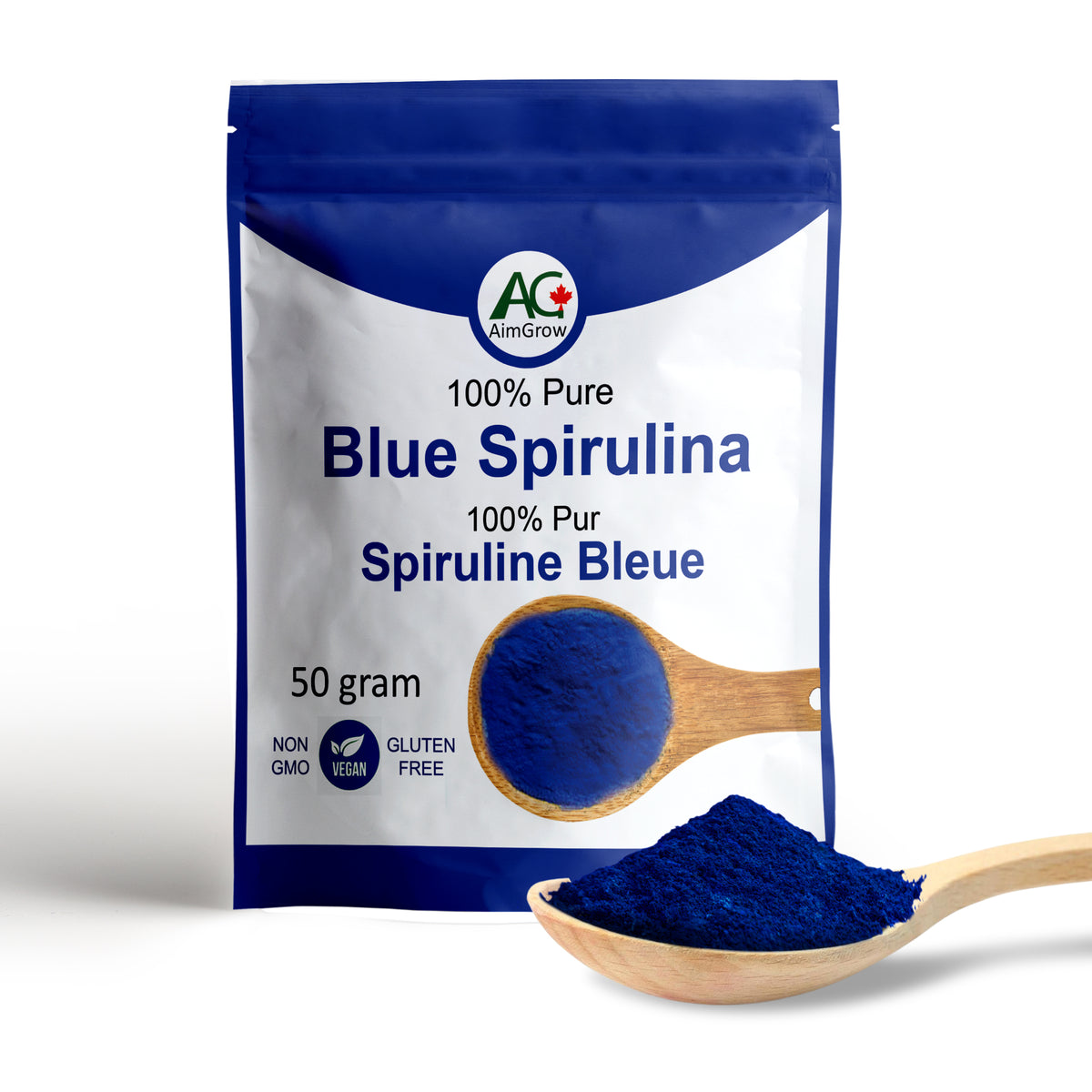
AimGrow lists a 50 g Blue Spirulina Phycocyanin retail product and has a wholesale products page. Neither page, on its own, proves that a particular lot is suitable for your US food use or that bulk blue extract is currently in stock.
If you are a brand owner or manufacturer, contact AimGrow with your finished food category, US launch market, target shade, processing conditions, pilot quantity, expected annual volume, and documentation requirements. Ask whether a material matching your regulatory and technical brief is available, and request the corresponding specification and lot documents before purchasing.
Practical starting point: tell us whether you make a beverage, yogurt, frozen dessert, confection, frosting, sauce, dressing, dip, cereal, or supplement coating. That lets both teams discuss the right use case instead of starting with a generic request for “natural blue.”
Trial guides by food category
Select the line closest to your finished food. Each guide focuses on the category-specific pilot questions a manufacturer can check before discussing a material specification or production quote. These are trial planning guides, not a claim that AimGrow’s retail product is approved for every factory use.
- Blue Spirulina Color for Drink Mix Factories: A Trial Plan — reconstitution and dry-blend QC.
- Spirulina Extract for Beverage Co-Packers: Line Trial Checklist — line-to-shelf handoff.
- Blue Spirulina Color in Nondairy Yogurt: Plant Trial Guide — cultured base, visual consistency and storage.
- Spirulina Extract for Nondairy Frozen Desserts: Buyer Guide — freeze, storage and thaw observations.
- Spirulina Extract for Candy and Chewing Gum Makers — component-specific color trial and QA.
- Natural Blue Frosting for Food Manufacturers: Batch Checks — shade, spreadability and decorating hold.
- Spirulina Extract in Sauces and Dips: Manufacturer Checks — savory product-category and process fit.
- Blue Spirulina Color for Ready-to-Eat Cereal: FDA Scope — extrusion exclusion and finished product classification.
- Spirulina Extract for Unheated Seasoning Mixes: Buyer Checklist — unheated scope and dry blend traceability.
- Spirulina Extract for Dessert Coatings and Toppings — surface shade, application and distribution.
Discuss a pilot: contact AimGrow with your food category, planned market, process, target shade, trial quantity, and required lot documents. Availability and suitability need confirmation for the offered material and intended use.
Sources and review date
Regulatory information reviewed November 14, 2026: 21 CFR § 73.530, FDA color additives overview, FDA industry dye-pledge tracker, and FDA labeling letter. Recheck the current rule and your product-specific requirements before commercial use.