

Chlorella can be protein-rich by dry weight and still add only a modest amount of protein to a small serving. That distinction matters when a green powder or tablet is described as a “protein source.” To answer “how much protein is in chlorella?” use the protein amount on the exact product’s label, not the percentage from a different species, study, or pouch.
AimGrow sells an organic broken-cell-wall chlorella powder in a 250 g pouch, plus separate 250 mg and 500 mg tablet listings. The 250 g pouch size and the milligrams per tablet do not tell you grams of protein per labelled serving.
Why a high protein percentage can look small on your plate
A peer-reviewed survey of 13 commercial chlorella products reported roughly 50% to 72% protein by dry weight across the products listed. A separate analysis of commercial chlorella biomasses found about 65% protein for most samples, while one laboratory-grown sample was much lower. Species, growing conditions, processing, and the actual finished product matter.
Here is illustrative arithmetic, not a verified AimGrow nutrition value or a recommended amount: if a dried chlorella product were 50% protein by weight, a 5 g portion would contain about 2.5 g protein. At 60%, the same 5 g portion would contain about 3 g. The serving is the small number in the calculation; a large dry-weight percentage does not turn a spoonful into a meal-sized protein portion.
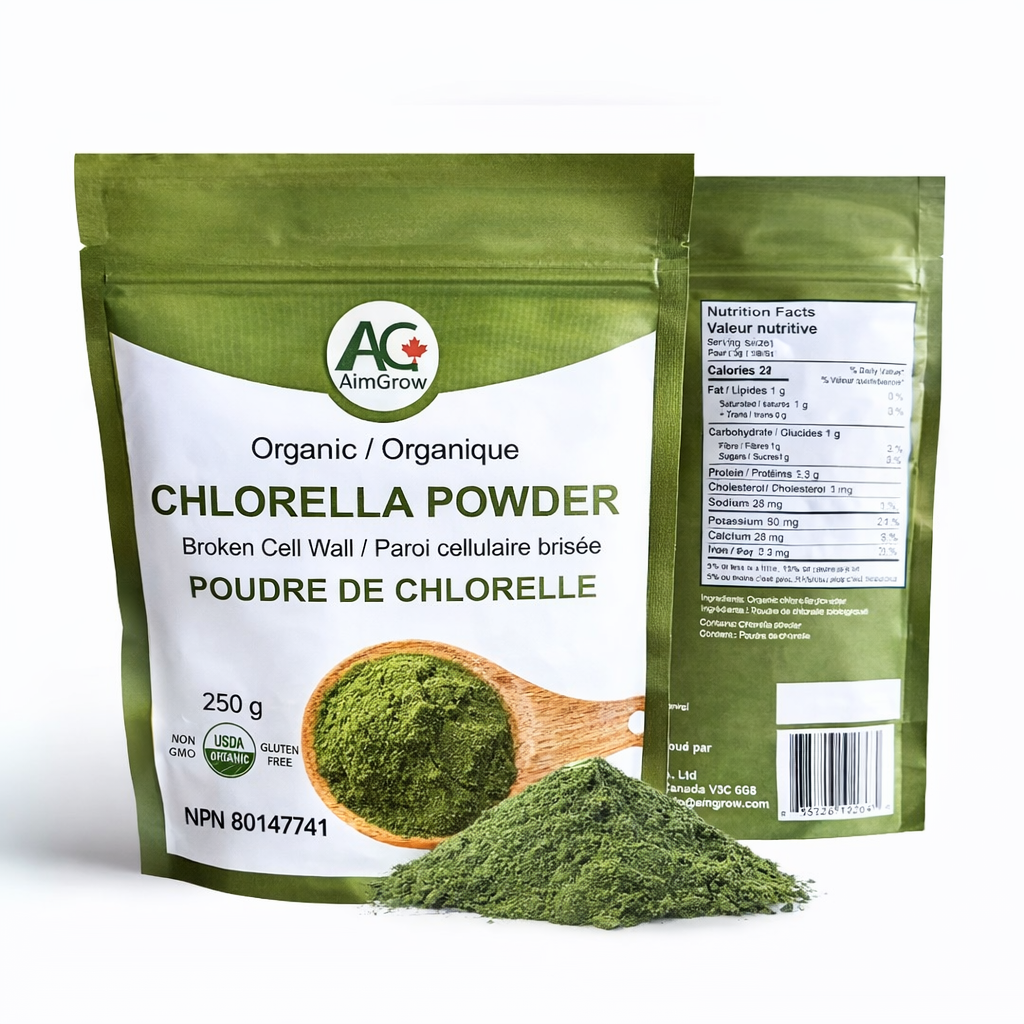
Read the label in this order
1. Find the serving size. A powder pouch may list grams per serving. A tablet pack may list a number of tablets per serving. The FDA’s supplement-labelling guide explains that a Supplement Facts panel identifies serving size and amounts per serving. Follow the label for the product and market you actually receive.
2. Find “protein,” not just “chlorella.” If a tablet says 500 mg chlorella, that is the listed amount of the chlorella ingredient per tablet; it is not 500 mg of pure protein. A 300-count bottle describes how many tablets are packed, not how many servings are in your breakfast. If a current label does not state protein per serving, ask AimGrow for product-specific nutrition information rather than multiplying by a generic online percentage.
3. Compare the amount with the whole meal. If you are planning a protein-rich breakfast, keep the food on your plate in the calculation. Eggs, yogurt, tofu, beans and other ordinary foods can be the main protein source; chlorella may be a small add-in. There is no need to increase a supplement amount just to chase a study’s protein dose.

What the protein studies actually tested
In a 2023 randomized trial of 36 healthy young adults, researchers gave a drink containing 25 g of protein from chlorella, spirulina or mycoprotein and measured short-term muscle protein synthesis. The chlorella group showed a response in that controlled setting. It does not follow that a typical small spoonful of powder or a few retail tablets supply 25 g protein, or that AimGrow’s product was the one tested.
Another human study of whole- and split-cell chlorella used drinks containing 20 g protein per test condition. Those are research-sized protein doses. Start from your actual label and ordinary food plan, not the study drink.
Is chlorella a complete protein?
Chlorella contains essential amino acids, but that phrase alone does not tell you how much protein a small serving supplies or how well a particular finished product is digested. The commercial-biomass study found protein accessibility varied in simulated digestion. Treat protein quantity and protein quality as separate questions.
How much protein is in one 500 mg chlorella tablet?
You cannot get an exact product-specific answer from “500 mg” alone. That is the listed tablet’s chlorella amount, not a protein assay. Check the current label for the protein declaration and labelled serving; ask AimGrow if it is unavailable.
Is chlorella powder a protein shake replacement?
Do not infer that from a dry-weight percentage. Compare grams of protein per labelled serving with the grams in the meal or shake you intend to replace. If you have a specific nutrition target or medical need, a registered dietitian can help you plan it.
Practical next step: View the AimGrow 250 g chlorella powder listing, then verify the current pouch’s serving and protein line. For the counted format, compare the 250 mg and 500 mg product labels separately.