

A dessert topping is often judged in the final second before purchase: the drizzle, shell, or surface color is what catches the eye. A coating manufacturer therefore needs more than a blue liquid sample. The factory should test its application method, the finished dessert, and the look of the product after distribution.
Does the current US rule cover this category?
The current US spirulina-extract listing includes dessert coatings and toppings. It also lists frostings as a separate category. Identify the actual component being colored and the finished food, and check any applicable standard of identity. The delayed 2026 expansion does not make every dessert use automatically covered. Read the exact 21 CFR § 73.530 entry and the FDA color-additive update before approving a commercial formula. Color additives require authorization for their intended use; the rule's exemption from FDA batch certification is not an exemption from identity, specification, use, or label requirements.
Define the component and how it is applied
Will the blue color go into a thin glaze, a thicker topping, a shell, or a decorative drizzle? Record the component formula, application temperature, hold time, and target coverage. A sample in a cup is only a starting point; the final surface can look lighter or darker once spread over a cake or frozen dessert.
Run a controlled comparison with an uncolored control and at least two color trials. Measure the conditions your line already tracks, then photograph the product immediately after application and after the planned package and storage period. Check coverage, drips, visible streaks, color transfer to packaging, and the appearance when the product is served. Let the plant decide whether the result is repeatable.
Keep taste and design together
A topping can affect the sensory experience even when it is thin. Have the team assess flavor, sweetness balance, texture, and visual fit with the base dessert. If the brand needs a pastel shade, test that exact target rather than pushing for the deepest possible blue. A sophisticated finished design is usually more valuable than an extreme color that hides the food.
Send a complete buyer brief
Give AimGrow the finished dessert category, colored component, process conditions, package, intended US market, target shade, pilot amount, and forecast volume. Request the exact extract identity, full composition and any carriers, current specification, and lot-specific COA. Ask whether sample and production grades are the same.
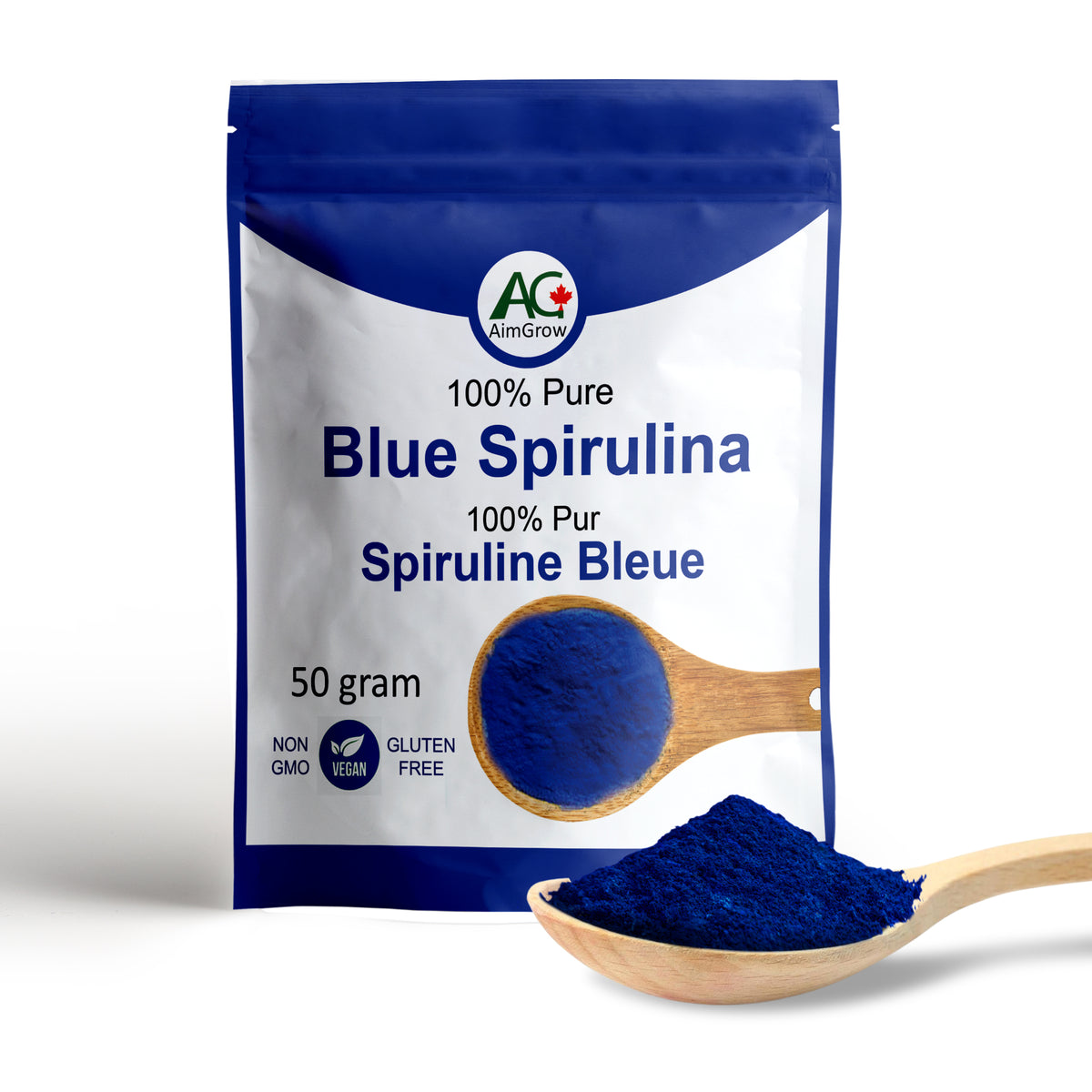
Quality and regulatory teams should approve the material, label statement, and any color-related claim before a commercial order. The official AimGrow retail photo below identifies a real product listing; it does not establish a factory-use grade or current bulk stock.

Where AimGrow fits in the buying conversation
AimGrow has an official 50 g Blue Spirulina Phycocyanin retail listing and a wholesale products page. Those pages do not establish that a particular lot meets the US color-additive identity or that bulk blue extract is currently available. Ask for the exact material specification and lot documents needed by your QA team.
Ready to discuss a pilot? Contact AimGrow with your finished food category, intended US market, process, target shade, sample quantity, expected volume, and requested documents. For the broader category map, read which US food manufacturers can use spirulina extract color; for a neighboring topic, see the frosting buyer guide.
Sources and review date
Regulatory sources reviewed November 15, 2026: 21 CFR § 73.530 and the FDA color-additives overview. Recheck the current rule, your exact ingredient, and your finished food before a commercial decision. Pilot photographs in this article are illustrative.