

A brand may approve a beautiful blue drink in a cup while its co-packer sees a different product after mixing, processing, filling, and a week in the actual bottle. The handoff between brand and plant is where a color project needs a written decision record. Spirulina extract can be considered for a nonalcoholic beverage, subject to the current US listing and the exact ingredient used.
Does the current US rule cover this category?
Nonalcoholic beverages are listed in the current 21 CFR 73.530. That is a category permission for compliant spirulina extract at good-manufacturing-practice levels, not a promise that it will perform under every process. The FDA's 2026 expansion to human foods generally remains delayed; this project should be assessed under the current list. Read the exact 21 CFR § 73.530 entry and the FDA color-additive update before approving a commercial formula. Color additives require authorization for their intended use; the rule's exemption from FDA batch certification is not an exemption from identity, specification, use, or label requirements.
Agree on the same target before the first line run
The brand owner, formulator, co-packer, and quality team should approve one reference sample and one way to view it. Specify the bottle, lighting, fill level, and acceptable shade range in words and photographs. If the target is merely ‘ocean blue,’ line operators have no useful release criterion.
Share the full process path with the color supplier: premix order, final beverage pH, any heat step, hold time, fill temperature, container material, and planned shelf life. Ask for data that matches those conditions, then make your own pilot. Keep a plain control and record the same variables at the tank, filler, packed case, and stored finished bottle. A bench sample cannot stand in for this evidence.
Put responsibilities in the co-packer brief
Decide who owns the incoming material approval, who checks the lot-specific COA, who releases the premix, and who signs the final bottle standard. If the co-packer buys the color, the brand still needs the agreed ingredient identity and label information. If the brand supplies it, the plant still needs receiving criteria and traceability.
Use a small line run to learn whether the mixing sequence gives an even shade and whether early and late fills look alike. Photograph bottles against the same neutral background. Keep retained samples under the storage conditions planned for the SKU. Your QA team, not a marketing image, decides whether the color is stable enough for launch.
Ask for documents before you schedule a run
Request the species and extraction process, full composition and any carrier, specification, and lot-specific results for lead, arsenic, mercury, and microcystin. Also ask which lot will be sent for pilot work and how production lots will be controlled. If a color or carrier changes later, reopen the plant trial and label review.

Where AimGrow fits in the buying conversation
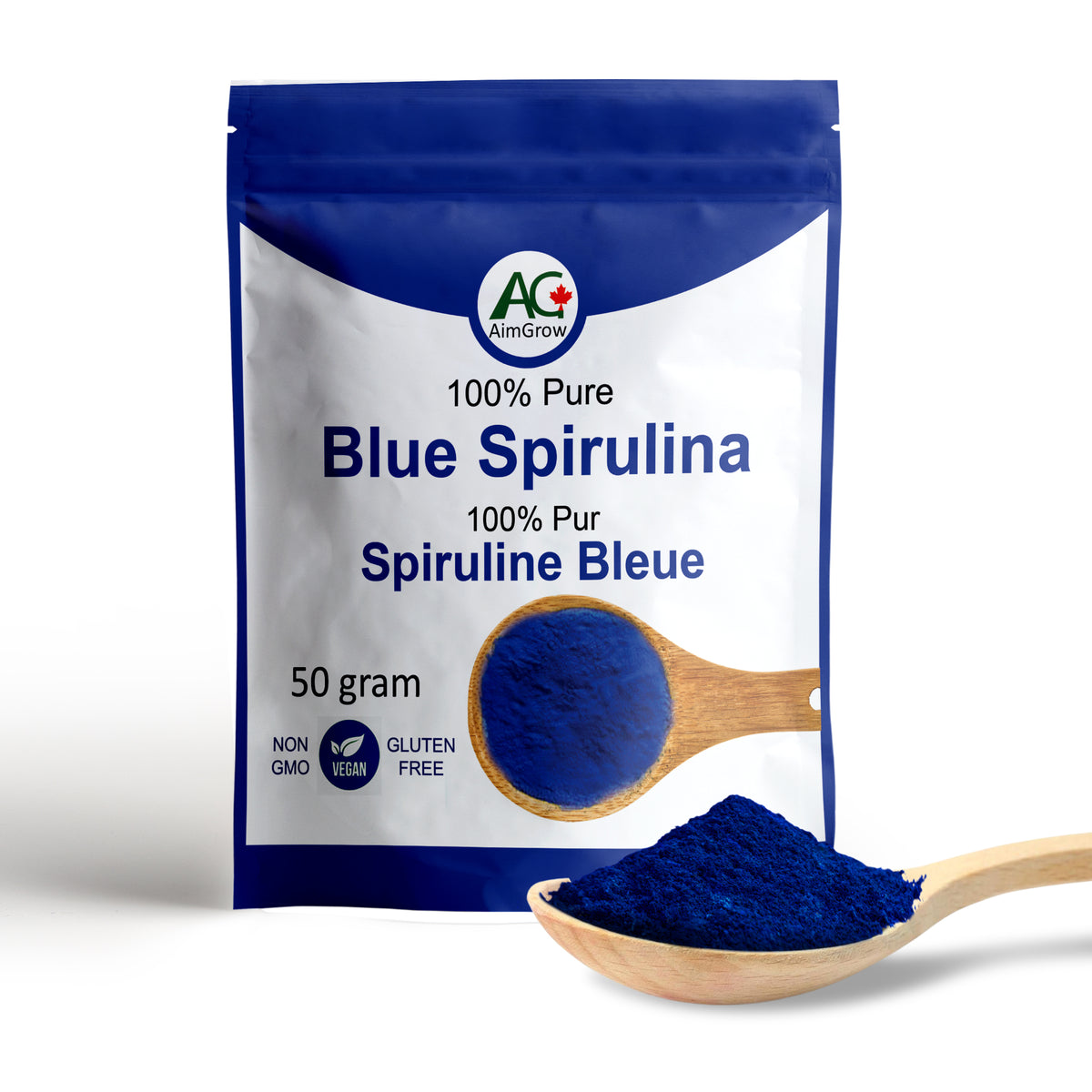
AimGrow has an official 50 g Blue Spirulina Phycocyanin retail listing and a wholesale products page. Those pages do not establish that a particular lot meets the US color-additive identity or that bulk blue extract is currently available. Ask for the exact material specification and lot documents needed by your QA team.
Ready to discuss a pilot? Contact AimGrow with your finished food category, intended US market, process, target shade, sample quantity, expected volume, and requested documents. For the broader category map, read which US food manufacturers can use spirulina extract color; for a neighboring topic, see the acidic beverage formulation guide.
Sources and review date
Regulatory sources reviewed November 15, 2026: 21 CFR § 73.530 and the FDA color-additives overview. Recheck the current rule, your exact ingredient, and your finished food before a commercial decision. Pilot photographs in this article are illustrative.