

Shopping for chlorella supplements can turn into a numbers puzzle. One AimGrow listing says 250 mg and 1,000 tablets; another says 500 mg and 300 tablets. Which number should matter to you? Start by separating the amount listed per tablet from the number of tablets in the pack. Then read the directions and ingredients on the exact product you would receive.
This guide compares two real AimGrow listings. It does not choose a daily amount or claim that the larger tablet works better. Product pages and package designs can change, so check the live listings and the current physical label before ordering or using either one.
The two packs you are actually comparing
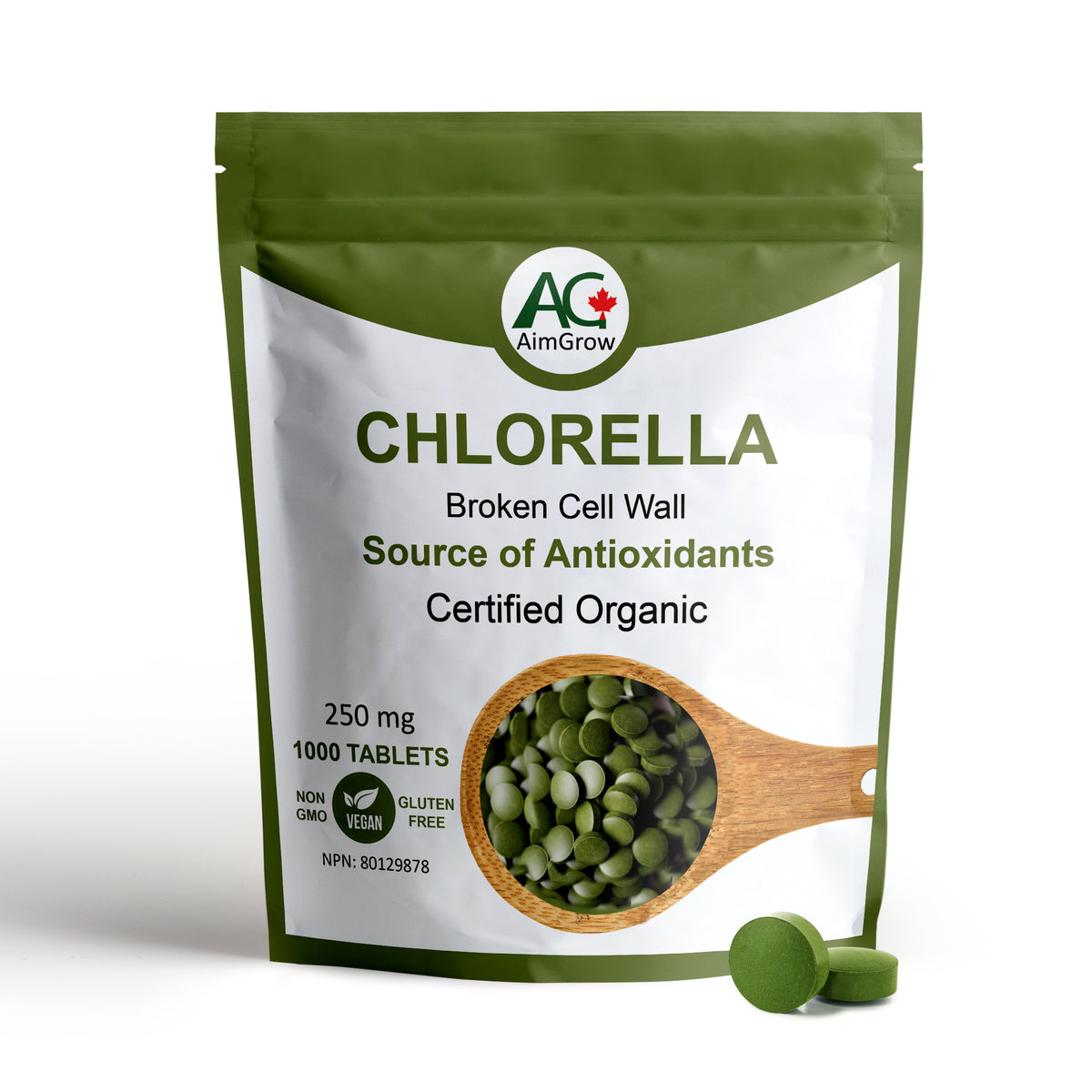
AimGrow lists Organic Chlorella (Broken Cell Wall), 250 mg, 1,000 counts and Organic Chlorella (Broken Cell Wall), 500 mg, 300 counts. Both are tablet listings. The first says 250 mg per tablet and 1,000 tablets in the pack; the second says 500 mg per tablet and 300 tablets in the pack.
The 500 mg number is twice the listed per-tablet amount of 250 mg. That arithmetic does not mean twice the health effect, and a 1,000-count pack does not mean 1,000 recommended uses. The missing piece is each product’s own current directions. Even two tablet products from the same brand can have different ingredient lists, cautions and recommended amounts.
Read the directions behind the front-of-pack numbers
Find the panel that states how much chlorella is in a recommended amount and how many tablets make up that amount. If you are viewing a U.S. dietary supplement, the FDA’s Supplement Facts guide explains that its panel lists a serving size, dietary ingredients and their amounts per serving. The pack’s net quantity is a separate piece of information.
AimGrow is a Canadian brand, and a Canadian natural health product may carry different label elements, including a Natural Product Number, recommended dose, medicinal and non-medicinal ingredients, cautions, lot and expiry details. Health Canada’s label guide explains those elements. A package photo on a website is useful, but you should confirm the current label for the exact product and market you are buying in.
Here is the practical comparison: put the recommended amount from the 250 mg pack beside the recommended amount from the 500 mg pack. Do not substitute one product’s directions for the other’s. If the current label is not visible online, ask AimGrow for a clear image of both sides of the relevant pack before you decide.
Check what else is in each tablet
Read both ingredient lists, including ingredients used to make the tablet hold together. Check allergy information, cautions and the expiry date on the pack you receive. The front words “organic” and “broken cell wall” do not tell you all of that. Our organic chlorella label guide explains what an organic claim does and does not establish; our broken-cell-wall guide covers the processing term.
Think about the physical routine too. Does the actual tablet size feel manageable to you? Do you want a larger counted pack in the cupboard or a smaller bottle on a shelf? A listing’s milligrams do not tell you tablet dimensions or swallowing comfort. If that matters, ask for the current product photo or measurements. Avoid crushing tablets or changing how you take them without checking the label or asking a pharmacist.
If you use medication, have a medical condition, are pregnant, or have a specific allergy, bring the exact product label to a pharmacist or qualified clinician. The NIH Office of Dietary Supplements notes that a label can help identify ingredients and directions, but it cannot by itself settle every quality or personal-suitability question.

A five-minute side-by-side check
- Open both exact listings: 250 mg, 1,000 counts and 500 mg, 300 counts.
- Record the listed amount per tablet and the pack count separately. They answer different questions.
- Find each pack’s directions and ingredient panel. Compare the amount specified for one recommended use, other ingredients and cautions. Request a current label image if needed.
- Check the actual package details. Verify lot, expiry, storage and any certification that matters to your purchase. A store image may show an older package version.
- Check live availability, shipping and total cost. Those can change. For a price comparison based on the product’s labelled use, see our chlorella cost-per-use guide.
A good choice is the product whose current label you understand, whose format fits your routine, and whose availability works for your order. The title numbers give you a starting point, not a personal serving instruction or a health ranking.
Common questions
Are 500 mg chlorella tablets twice as good as 250 mg tablets?
No such conclusion follows from the number alone. It describes a listed per-tablet amount, not a measured health outcome. Compare each pack’s directions and product details.
Does 1,000 tablets mean 1,000 servings?
No. It is the number of tablets in the package. The number of recommended uses depends on the directions for that exact product.
Can I swap the directions between these two AimGrow packs?
Do not assume so. Read the current directions for the specific pack you have. Ask a pharmacist or clinician about personal use questions, especially if you take medication or have a medical concern.