

Blue spirulina can leave a blue tint or stain when powder or liquid sits on a cup, seal, counter, towel, or garment. Whether the mark remains depends on the material, finish, contact time, and cleaning method, so no one can promise that every surface will clean the same way. The practical response is simple: lift loose powder without spreading it, blot liquid promptly, rinse or wash only as the item’s care instructions allow, and inspect before heat-drying fabric. Never mix household cleaning products in an attempt to remove the colour faster.
Why such a small amount can make a visible mark
“Blue spirulina” is commonly used for a phycocyanin-rich blue extract. The U.S. Food and Drug Administration lists spirulina extract for a technical effect as a colour or colouring adjunct. In other words, creating colour is the point. That does not mean every blue mark is permanent, and it does not tell you how a particular countertop, silicone seal, or fabric will react.
Treat the current ingredient label—not the shade alone—as the source of product information. A vivid blue spill cannot prove that a powder contains an added synthetic dye, nor can a pale result prove purity.
What to do in the first minute
- Stop the spread. Move the pouch, glass, and spoon away from the spill.
- Lift dry powder. Scoop or gently tap up loose powder instead of wiping it across a larger area. Avoid creating airborne dust.
- Blot liquid. Use a clean, absorbent cloth or paper towel. Press; do not scrub colour into an unknown finish or fabric.
- Check the item’s instructions. Use only a cleaner and water temperature allowed for that counter, cup, appliance part, or garment.
- Repeat gently. Several mild passes are safer than immediately reaching for a strong or abrasive product.
The American Cleaning Institute advises treating stains early, following fabric-care directions, and not combining stain-removal products with bleach, ammonia, or other household cleaners.

Cups, bottles, straws, and lids
Rinse drinkware soon after use, then wash it with the ordinary dishwashing method approved by its manufacturer. Pay attention to removable seals, straw valves, threads, and textured areas where blue liquid can remain. If a tint is still visible, repeat the permitted wash and let the parts air-dry so you can inspect them clearly.
Do not assume an abrasive pad, dishwasher cycle, bleach solution, or soaking treatment is safe for every material. Follow the drinkware maker’s directions, especially for printed coatings, insulated lids, soft silicone, and parts with adhesives.
Sealed counters and work surfaces
Blot the spill, then use the surface maker’s approved routine cleaner or mild soap-and-water method. Work with a clean white cloth so you can see whether colour is transferring. If you want to try a new cleaner, test it in a hidden spot first.
Natural stone, wood, laminate, grout, paint, and engineered surfaces have different care limits. Avoid giving a universal vinegar, baking soda, bleach, or abrasive recommendation: a method that is harmless on one finish can dull or damage another. If the mark persists, ask the counter or surface manufacturer for material-specific guidance.
Clothes, towels, and fabric
Act promptly, but do not improvise with a strong chemical. Remove loose powder, blot excess liquid, and follow the garment’s care label and the stain-remover label. The American Cleaning Institute’s stain-removal guide recommends pretreating, laundering according to fabric instructions, and repeating the process if needed. It also advises not putting the item in the dryer until the stain is gone, because heat can set a remaining mark.
For dry-clean-only, delicate, colourfastness-unknown, or valuable fabric, pause and ask a professional cleaner. A blue spot is frustrating; fibre or dye damage from the wrong treatment can be harder to correct.
Make blue-spirulina prep less messy
- Measure over a tray, plate, sink, or washable mat.
- Use a dry spoon and close the pouch before stirring the drink.
- Make a small concentrate in a low, stable cup before adding it to a tall glass.
- Keep one washable cloth nearby so you can blot a drop immediately.
- Rinse tools before the blue liquid dries around seams or textured grips.
For the mixing method, see How to Use Blue Spirulina Powder. If you are deciding which blue ingredient fits an acidic drink, read Blue Spirulina vs. Butterfly Pea.
A note about the AimGrow 50g pack
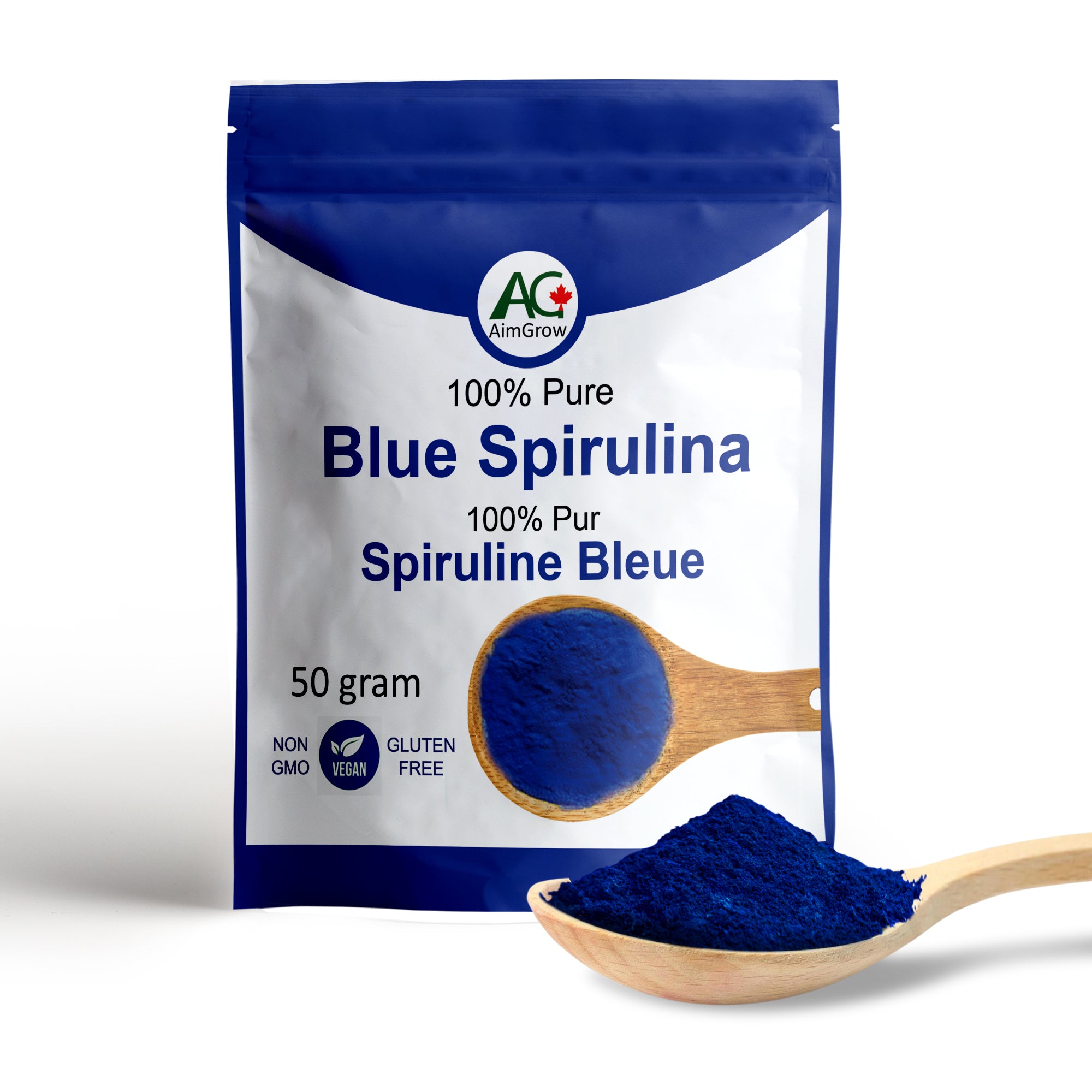
The live AimGrow Blue Spirulina (Phycocyanin) Powder, 50g product page identifies the retail pack and provides current buying information. Check the current label, directions, storage instructions, price, and availability before use. Keep the pouch closed and stored as directed; 50g is the package weight, not a serving size.
FAQ
Does blue spirulina permanently stain glass?
Not necessarily. Smooth glass is often straightforward to inspect and rewash, but coatings, scratches, seals, and residues can behave differently. Rinse promptly and use the glassware maker’s approved cleaning method.
Can I use bleach or baking soda on a blue spirulina stain?
Only if the item or surface manufacturer and the cleaning-product label allow it. Do not mix bleach with ammonia, acids, or other cleaners. A material-specific mild method is the safer starting point.
Why does blue colour stay in a silicone seal or straw?
Liquid can remain in seams, valves, texture, or a removable gasket after the main cup looks clean. Disassemble only as the manufacturer directs, wash permitted parts, rinse, and let them dry before rechecking.
Does a stain prove the powder contains artificial food dye?
No. Colour transfer alone cannot identify ingredients. Read the full ingredient statement and request product-specific documentation if composition matters to you.