

Yes. Whole green spirulina contains chlorophyll, including chlorophyll a, alongside other naturally occurring pigments. Chlorophyll helps explain the powder's green appearance, but it is not the only colour contributor: spirulina also contains blue phycocyanin and carotenoid pigments. That means a spoonful of green spirulina powder is not the same thing as a bottled product labelled “liquid chlorophyll,” and the current AimGrow product page does not state a quantified chlorophyll amount.
Why is spirulina green if it is called blue-green algae?
The name “blue-green” describes the combination of pigments rather than one exact shade. A scientific review of spirulina, also discussed under the name Limnospira platensis, reports chlorophyll, phycocyanin, and carotenoids among its pigments. Chlorophyll contributes green; phycocyanin contributes blue; the whole powder brings those colours together in a dark green or blue-green appearance.
The colour you see in a glass or bowl can change with the amount used, the colour of the base food, lighting, and how evenly the powder is mixed. A pale yogurt may turn vivid green, while cocoa or berries may make the final shade look muted. Colour alone cannot tell you an exact chlorophyll concentration.
Is spirulina the same as liquid chlorophyll?
No. Spirulina powder is a whole food ingredient with multiple components and pigments. A product sold as liquid chlorophyll is a separate finished product with its own ingredient list, concentration, directions, and claims. You should not swap one label's directions for the other's or assume they deliver the same composition.
The same caution applies to blue spirulina. Products sold under that name are commonly positioned around a blue pigment fraction rather than the complete dark-green powder. If that is the comparison you need, read our focused guide to blue spirulina versus green spirulina instead of treating every algae powder as interchangeable.
What does chlorophyll mean for using spirulina in food?
For a home cook, the most immediate effect is visual. Even a small labelled amount of whole green spirulina can noticeably colour a light food or drink. That can be useful when you want a naturally deep green smoothie, yogurt, oatmeal, or dressing, but it can also surprise you if you expect the base food to keep its original colour.
Mix the powder into a small portion first so you can see the shade and texture before adding more ingredients. With yogurt, for example, fold the powder into one spoonful until smooth and then blend that green portion into the rest. This is a colour-control technique, not a way to measure chlorophyll.

Food research on spirulina enrichment also notes that adding spirulina can change sensory qualities such as colour, flavour, and texture. Those changes depend on the recipe and amount. They should be tested in the actual food rather than predicted from a photo.
How much chlorophyll is in AimGrow spirulina powder?
The live AimGrow Organic Spirulina Powder, 454 g page identifies the product as organic spirulina powder and gives the net bag weight. It does not provide a quantified chlorophyll value. The 454 g figure is the total package weight, not the weight of chlorophyll and not a serving direction.
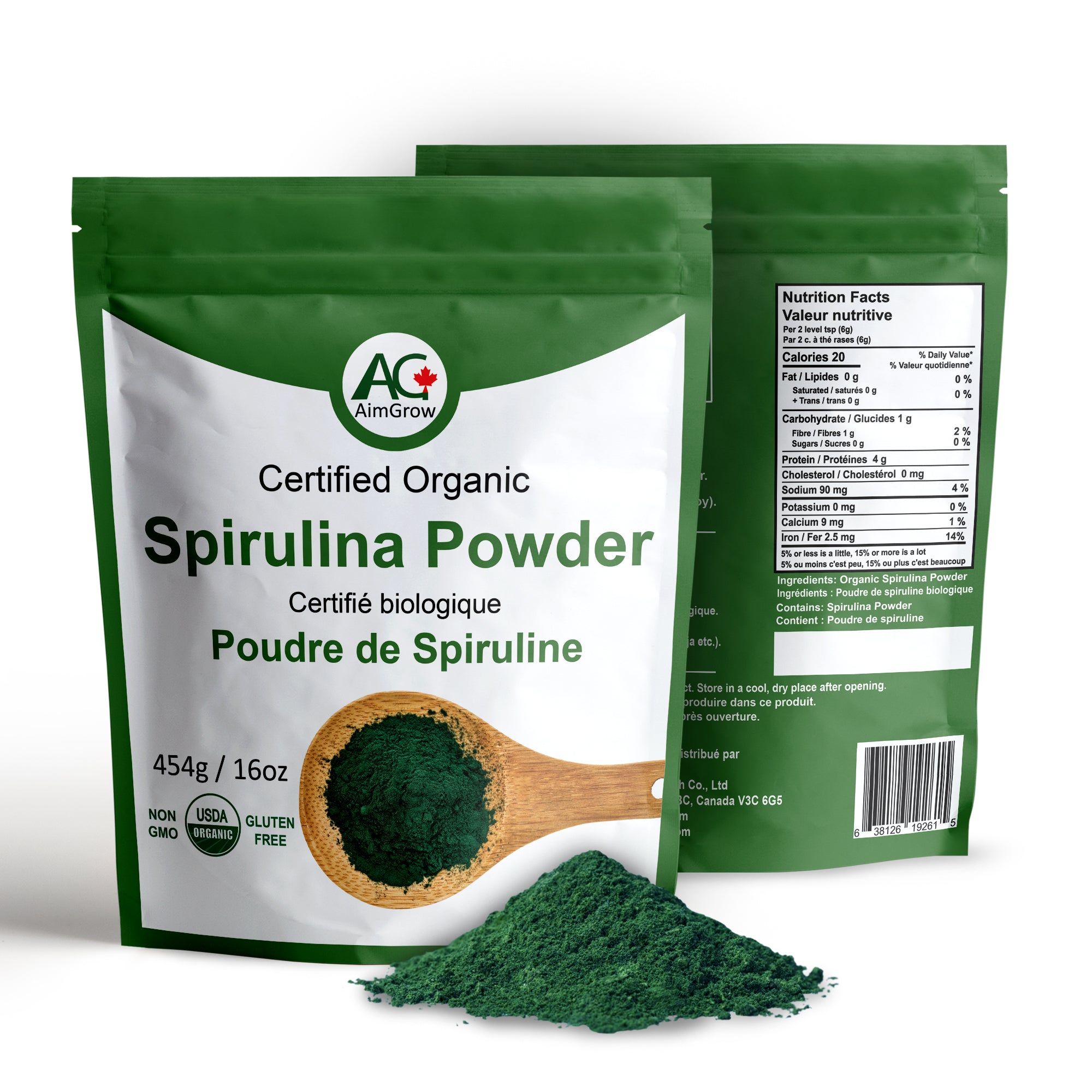
If a precise pigment number matters for a specific purpose, use product-specific documentation that actually measures it. Do not borrow a value from an unrelated study, another brand, or a generic web article. Natural ingredients and analytical methods can vary.
Does the chlorophyll change how spirulina should be stored?
Follow the storage directions on the current package. Keep the bag properly closed and use a clean, dry utensil. This protects the powder from ordinary kitchen moisture and contamination. There is no need to invent special handling based only on the word chlorophyll.
If your main question is how long an opened bag remains suitable, use the date and storage guidance on your package rather than judging only by colour. A different shade in a photograph is not a freshness test.
A practical quality and claims note
Knowing that spirulina contains chlorophyll does not prove a detox, disease-treatment, or other medical result. This article explains composition and food use only. The US Food and Drug Administration also advises consumers of blue-green algae products to pay attention to sourcing and contamination risks such as microcystins. Choose a clearly identified food product and follow its label. Anyone who is pregnant, nursing, taking medication, or managing a medical condition should discuss supplement use with a qualified health professional.
Frequently asked questions
Does green spirulina powder contain chlorophyll?
Yes. Scientific literature identifies chlorophyll among spirulina's pigments. It appears alongside phycocyanin and carotenoids rather than as an isolated ingredient.
Is spirulina's green colour caused only by chlorophyll?
No. The visible shade reflects multiple pigments plus the food or drink in which the powder is used. Lighting and concentration also affect how the colour looks.
Is spirulina better than liquid chlorophyll?
They are different products, so “better” depends on the specific purpose and labels being compared. Do not treat whole spirulina powder and a liquid chlorophyll product as equivalent.
Can I calculate chlorophyll from the 454 g bag size?
No. The 454 g number is the package's net contents. It does not state how many grams of chlorophyll are present. A defensible pigment amount would require product-specific measured data.
In short: spirulina does contain chlorophyll, but its colour comes from a pigment mix, and its package weight cannot be turned into a chlorophyll claim.